Contents
- Why Retirement Accounts Become Fragmented
- What Is an IRA Rollover?
- Why More Americans Are Choosing IRA Rollovers
- Common IRA Rollover Rules Investors Should Understand in 2026
- Signs It May Be Time to Review Your Retirement Accounts
- The Growing Importance of Retirement Account Management
- How WealthRabbit Helps Investors Simplify Retirement Planning
- Final Thoughts
- FAQs
- Article Sources
- IRA assets have grown to $19.2 trillion, with 61% of Traditional IRA-owning households now holding rollover assets from employer plans, per ICI's 2025 survey.
- The top reasons households roll over: consolidating scattered accounts (63%), not wanting to leave assets with a former employer (62%), and preserving tax treatment (58%).
- A direct rollover (funds move institution-to-institution) avoids the risks of an indirect rollover, which requires redepositing funds within 60 days or facing taxes and penalties.
- The once-per-year rollover limit applies to indirect IRA-to-IRA rollovers, not to direct trustee-to-trustee transfers.
- Moving pretax assets into a Traditional IRA is generally not a taxable event, but converting to a Roth IRA is, planning the tax impact matters before initiating either.
- Signs it may be time to review accounts: multiple retirement accounts, several job changes, difficulty tracking balances, drifting investment strategy, or outdated beneficiary designations.
For years, retirement planning conversations focused on contributions, how much to save, where to invest, and how to maximize employer matches. But a new trend is reshaping retirement planning in 2026.
According to recently released research from the Investment Company Institute (ICI), 61% of Traditional IRA-owning households now hold rollover assets from employer-sponsored retirement plans. At the same time, IRA assets have grown to $19.2 trillion, accounting for a significant share of retirement assets in the United States.
The message is clear: retirement planning today is increasingly about managing and consolidating existing retirement accounts rather than simply opening new ones.
As Americans continue changing jobs throughout their careers, retirement savings often become scattered across multiple accounts, making it harder to track investments, monitor performance, and maintain a consistent long-term strategy.
Why Retirement Accounts Become Fragmented
The average worker today is far more likely to change employers than previous generations.
Every job transition can leave behind another retirement account.
Over time, an investor may accumulate:
- Multiple 401(k) accounts from former employers
- One or more Traditional IRAs
- Roth IRAs
- Employer-sponsored retirement plans at different stages of their career
While having multiple accounts is common, it can create unnecessary complexity.
Investors often find themselves managing different providers, investment options, account statements, fee structures, and beneficiary designations.
As retirement assets grow, keeping track of everything becomes increasingly difficult.
This may explain why 63% of households that completed a rollover cited account consolidation as one of their primary motivations.
What Is an IRA Rollover?
An IRA rollover allows retirement assets to move from an eligible employer-sponsored retirement plan into an Individual Retirement Account (IRA).
Common rollover sources include:
- 401(k) plans
- 403(b) plans
- Governmental 457(b) plans
- Other qualified employer-sponsored retirement plans
When completed properly, a rollover generally allows retirement savings to maintain their tax-advantaged status.
For many investors, rolling assets into an IRA can simplify retirement management by bringing assets together under one account structure.
Why More Americans Are Choosing IRA Rollovers
The latest retirement data suggests that investors are not simply moving assets for convenience. Several practical factors are driving rollover activity.
Account Consolidation
Managing multiple retirement accounts across different providers can be time-consuming.
Consolidation can make it easier to:
- Track total retirement savings
- Monitor investment performance
- Review account allocations
- Manage beneficiaries
- Prepare for retirement distributions
Rather than logging into several platforms, investors can often view their retirement strategy through a more centralized approach.
Greater Investment Flexibility
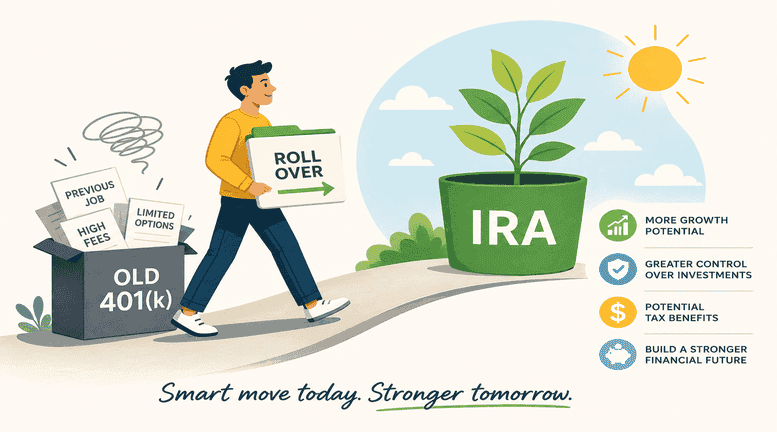
Employer-sponsored retirement plans typically offer a limited menu of investment choices.
IRAs often provide access to a broader range of investments, allowing investors to build a portfolio that better aligns with their goals, risk tolerance, and retirement timeline.
Easier Long-Term Retirement Planning
As retirement approaches, investors need a clear understanding of their overall financial picture.
Consolidating retirement assets can simplify:
- Withdrawal planning
- Required Minimum Distribution (RMD) management
- Asset allocation reviews
- Retirement income strategies
Common IRA Rollover Rules Investors Should Understand in 2026
Before moving retirement assets, it is important to understand the rules that govern rollovers.
Direct Rollovers vs. Indirect Rollovers
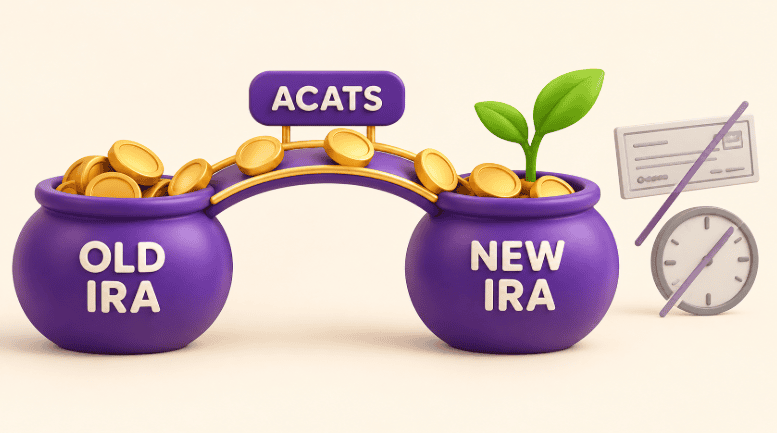
A direct rollover occurs when assets move directly from one retirement account provider to another.
This is generally considered the simplest and safest approach because funds never pass through the account owner's hands.
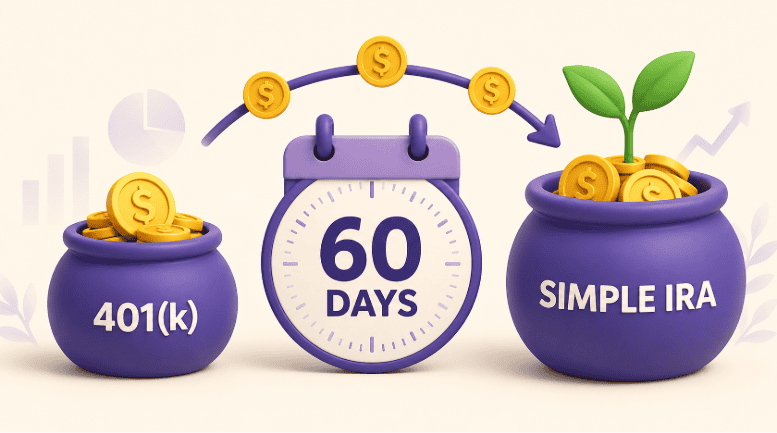
An indirect rollover occurs when the account owner receives the distribution and must redeposit the funds into another eligible retirement account within 60 days.
Missing this deadline can result in taxes and potential penalties.
The Once-Per-Year Rollover Rule
One of the most misunderstood retirement rules involves the once-per-year rollover limitation.
This rule generally applies to certain indirect IRA-to-IRA rollovers.
However, direct trustee-to-trustee transfers are not subject to this limitation.
Because rollover rules can vary depending on account type and transaction structure, investors should review their options carefully before initiating a transfer.
Traditional IRA vs. Roth IRA Rollovers
Not all rollovers are treated the same for tax purposes.
Moving assets from a Traditional retirement account into a Traditional IRA is generally not a taxable event when performed correctly.
However, converting pre-tax retirement assets into a Roth IRA typically creates taxable income for the year of conversion.
Understanding these differences can help investors avoid unexpected tax consequences. Have a quick look at the IRS Rollover Reference Chart.
Signs It May Be Time to Review Your Retirement Accounts
Not every investor needs to consolidate retirement assets.
However, it may be worth reviewing your situation if:
- You have retirement accounts with multiple providers.
- You have changed jobs several times.
- You struggle to track account balances.
- Your investment strategy varies significantly between accounts.
- Beneficiary information has not been reviewed recently.
- You are approaching retirement and want a clearer view of your savings.
A periodic retirement account review can help identify opportunities to simplify account management and align investments with long-term goals.
The Growing Importance of Retirement Account Management
The latest ICI research highlights an important shift in retirement planning.
For many households, the biggest retirement decisions are no longer centered around annual contributions alone.
Instead, they involve managing existing retirement assets effectively.
With trillions of dollars now held in IRAs and millions of investors maintaining rollover assets, retirement account organization has become an increasingly important part of long-term financial planning.
The challenge is not simply saving more.
It is ensuring that retirement assets remain easy to manage, aligned with investment objectives, and positioned to support future retirement income needs.
How WealthRabbit Helps Investors Simplify Retirement Planning
As retirement accounts become more fragmented across employers and financial institutions, investors often seek ways to bring greater clarity to their retirement strategy.
WealthRabbit provides a streamlined platform designed to help investors manage IRA accounts more efficiently, maintain visibility into retirement assets, and make informed decisions about their long-term financial future.
Whether you're evaluating an old 401(k), considering a rollover, or looking to simplify retirement account management, taking time to review your options today can help create a more organized retirement strategy for the years ahead.
Final Thoughts
The newest retirement industry data reveals a clear trend: Americans are increasingly consolidating retirement assets and using IRAs as a central part of their retirement planning strategy.
With 61% of Traditional IRA owners already holding rollover assets, retirement planning in 2026 is becoming less about opening additional accounts and more about effectively managing the accounts investors already have.
For investors navigating job changes, multiple retirement plans, and evolving financial goals, understanding rollover opportunities and consolidation strategies may be one of the most valuable steps toward a simpler and more organized retirement future.
FAQs
About the Author

Not sure which plan fits?
Answer three quick questions about team size and budget - we'll match you to a plan, no reading required.