Contents
Published November 13, 2026. Every figure below was checked against the IRS news release IR-2026-136 and Notice 2026-66.
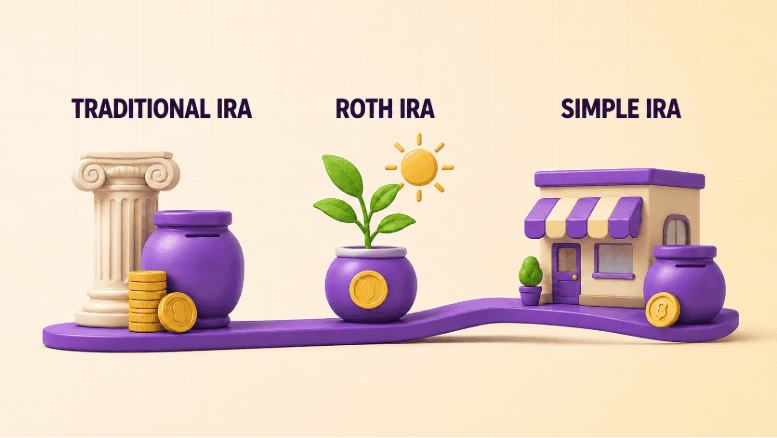
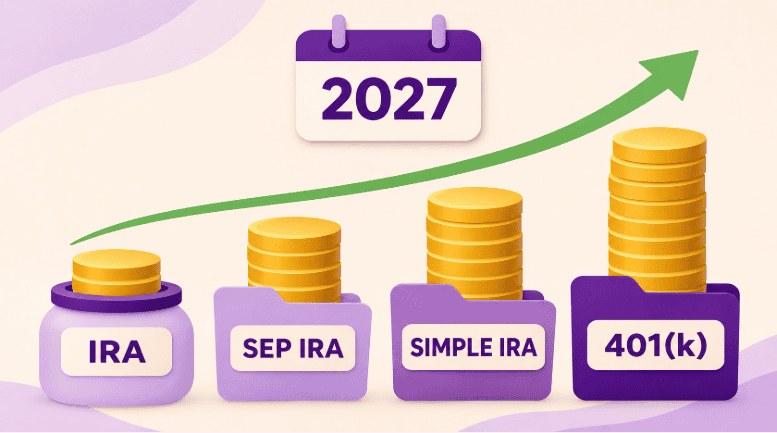
For 2027, the IRA contribution limit holds at $7,500, but the income ranges that decide who can deduct a Traditional IRA contribution or contribute directly to a Roth IRA all moved up. The 401(k) limit rises by $1,000 to $25,500, SIMPLE IRA limits go up, and the maximum SEP IRA contribution climbs to $75,000.
If you save in an IRA, the story is not the contribution limit. It is the doorway. A higher income ceiling means some savers who were shut out of a direct Roth IRA in 2026 may be back in for 2027.
- IRA limit is unchanged. You can contribute up to $7,500 to Traditional and Roth IRAs combined in 2027, or $8,600 if you are 50 or older.
- Roth IRA income ranges rise. Direct contributions phase out between $158,000 and $173,000 for single filers and between $250,000 and $260,000 for married couples filing jointly.
- Traditional IRA deduction ranges rise for savers covered by a workplace plan: $83,000 to $93,000 for single filers and $133,000 to $153,000 for married couples filing jointly.
- SEP IRA maximum rises to $75,000 (up from $72,000), or 25% of pay, whichever is less, with up to $375,000 of pay counted.
- SIMPLE IRA limit rises to $17,500, or $19,100 for certain plans.
- 401(k) limit rises to $25,500. With catch-up contributions, that is $34,000 at age 50 and over and $37,250 at ages 60 to 63.
- The Saver’s Match arrives in 2027 and replaces the Saver’s Credit for retirement plan and IRA contributions.
- 2026 limits still apply until December 31, 2026, and you can make 2026 IRA contributions until April 15, 2027.
The 2027 limits at a glance
| Item | 2026 | 2027 |
|---|---|---|
| IRA contribution (Traditional and Roth combined) | $7,500 | $7,500 (no change) |
| IRA catch-up, age 50 and over | $1,100 | $1,100 (no change) |
| 401(k), 403(b), governmental 457 and Thrift Savings Plan | $24,500 | $25,500 |
| 401(k) catch-up, age 50 and over | $8,000 | $8,500 |
| 401(k) catch-up, ages 60 to 63 | $11,250 | $11,750 |
| SIMPLE IRA, standard limit | $17,000 | $17,500 |
| SIMPLE IRA, higher limit for certain plans | $18,100 | $19,100 |
| SEP IRA and overall defined contribution maximum | $72,000 | $75,000 |
| Compensation limit for plan calculations | $360,000 | $375,000 |
Part 1: What changed for IRAs
The IRA limit holds at $7,500
The annual limit for Traditional and Roth IRAs stays at $7,500, and the catch-up for savers 50 and over stays at $1,100. That puts the 2027 maximum at $8,600 if you qualify for the catch-up. The limit is shared across all of your Traditional and Roth IRAs, and it cannot exceed your taxable compensation for the year.
If you file jointly, a spouse with little or no income may still be able to contribute to an IRA as long as the other spouse has enough taxable compensation to cover both contributions.
Traditional IRA deduction ranges move up
Anyone with earned income can contribute to a Traditional IRA, but whether you can deduct the contribution depends on whether you or your spouse is covered by a retirement plan at work, and on your income. If neither of you is covered, these phase-outs do not apply.
| Filing situation | 2026 phase-out range | 2027 phase-out range |
|---|---|---|
| Single, covered by a workplace plan | $81,000 to $91,000 | $83,000 to $93,000 |
| Married filing jointly, contributor covered by a workplace plan | $127,000 to $149,000 | $133,000 to $153,000 |
| Contributor not covered, spouse covered | $242,000 to $252,000 | $250,000 to $260,000 |
| Married filing separately, covered by a workplace plan | $0 to $10,000 | $0 to $10,000 (no change) |
What it means in real life: a single filer covered by a workplace plan with $92,000 of income could not deduct a Traditional IRA contribution in 2026. At the same income in 2027, that saver lands inside the new range and can take a partial deduction.
Roth IRA income limits rise
A Roth IRA works the other way around: you contribute after-tax dollars, and qualified withdrawals come out tax-free. The catch is the income ceiling for direct contributions, and for 2027 it moves up.
| Filing situation | 2026 phase-out range | 2027 phase-out range |
|---|---|---|
| Single or head of household | $153,000 to $168,000 | $158,000 to $173,000 |
| Married filing jointly | $242,000 to $252,000 | $250,000 to $260,000 |
| Married filing separately | $0 to $10,000 | $0 to $10,000 (no change) |
What it means in real life: a single filer earning $170,000 was above the Roth range in 2026 and could not contribute directly. At the same income in 2027, that saver is inside the range and can make a partial contribution. The same is true for a married couple filing jointly with $255,000 of income. The IRS publishes a worksheet to work out the exact partial amount.
What this means for the Backdoor Roth
If your income is above the new ceilings, the Backdoor Roth is still the route most high earners ask about. You make a nondeductible contribution to a Traditional IRA, then convert it to a Roth IRA. Roth conversions have no income limit, which is why the strategy works around the direct-contribution ceiling. It is permitted under current tax law, and Congress could change that in the future.
The 2027 announcement does not change the mechanics. Each year’s contribution is still capped at 7,500(8,600 if you are 50 or older). Two details trip people up:
- The pro-rata rule: The IRS combines your Traditional, SEP, and SIMPLE IRA balances when it works out how much of a conversion is taxable. If you hold pre-tax money in any of them, part of your conversion can be taxable. 401(k) balances are not part of that calculation.
- Form 8606: Nondeductible contributions and conversions are reported on this form with your tax return. Skip it, and you risk paying tax twice on the same dollars.
That is exactly the paperwork WealthRabbit built its Backdoor Roth IRA to take off your plate. It opens both IRAs in one flow, then handles the conversion and invests the funds. You still report the contribution and conversion on your tax return.
Saver’s Match replaces the Saver’s Credit
Starting with 2027 contributions, the Saver’s Match replaces the Saver’s Credit for retirement plan and IRA contributions. Instead of a tax credit, eligible lower- and moderate-income savers receive a federal matching contribution of up to $1,000 a year, deposited into their retirement account. The IRS is still finalizing the rules.
The Saver’s Credit itself continues for contributions to ABLE accounts, and the 2027 income limits in the IRS release apply to those: $83,000 for married couples filing jointly, $62,250 for heads of household, and $41,500 for single filers and married individuals filing separately.
Giving from your IRA
If you make qualified charitable distributions from an IRA, the annual limit rises from $111,000 to $114,000 in 2027. The one-time election for gifts to a split-interest entity rises from $55,000 to $57,000.
Part 2: SEP IRA limits for 2027
A SEP IRA is funded by the employer, which makes it popular with self-employed people and small business owners who want a high ceiling and a simple setup. For 2027, the ceiling goes up.
| Item | 2026 | 2027 |
|---|---|---|
| Maximum contribution per employee | Lesser of 25% of pay or $72,000 | Lesser of 25% of pay or $75,000 |
| Maximum pay counted in the calculation | $360,000 | $375,000 |
| Pay threshold under SEP rules | $800 | $800 (no change) |
A few things to know:
- Employer contributions only. The IRS is clear that SEP plans do not allow employee salary deferrals or catch-up contributions.
- Reaching the maximum. At 25% of pay, an employee reaches the $75,000 cap at $300,000 of compensation.
- Self-employed owners. Your own contribution is figured with a special calculation based on net earnings. The IRS walks through it in Publication 560.
- Roth option. If you would rather pay tax now and take qualified withdrawals tax-free, a Roth SEP IRA uses the same SEP limits.
- Watch the pro-rata rule. SEP IRA balances count in the Backdoor Roth calculation above.
Part 3: SIMPLE IRA limits for 2027
The SIMPLE IRA is built for employers with 100 or fewer employees, and it asks employers to contribute either a match of up to 3% of pay or a 2% contribution for every eligible employee. Employee limits rise by $500 in 2027, and the higher limit for certain plans rises by $1,000.
| Item | Standard plans | Higher-limit plans |
|---|---|---|
| Employee contribution, 2026 | $17,000 | $18,100 |
| Employee contribution, 2027 | $17,500 | $19,100 |
| Catch-up, ages 50 to 59 and 64 and over | $4,000 | $3,850 |
| Catch-up, ages 60 to 63 | $5,250 | $5,250 |
| Maximum with catch-up, ages 50 to 59 and 64 and over | $21,500 | $22,950 |
| Maximum with catch-up, ages 60 to 63 | $22,750 | $24,350 |
The catch-up amounts did not change from 2026. The maximums with catch-up are our own sums of the IRS figures.
Who gets the higher limit? Employers with 25 or fewer employees. Employers with 26 to 100 employees can offer it if they provide a 4% match or a 3% contribution for every eligible employee. The cap on optional additional employer contributions also rises, from $5,300 to $5,400.
For employers, WealthRabbit connects your SIMPLE IRA to payroll, so contributions can run automatically each pay cycle instead of through manual uploads.
Part 4: 401(k) and other workplace plan changes
If you or your clients are comparing plans, here is what moved for 401(k), 403(b), governmental 457, and Thrift Savings Plan participants.
| Item | 2026 | 2027 |
|---|---|---|
| Employee contribution limit | $24,500 | $25,500 |
| Catch-up, age 50 and over | $8,000 | $8,500 |
| Maximum with catch-up, age 50 and over | $32,500 | $34,000 |
| Catch-up, ages 60 to 63 | $11,250 | $11,750 |
| Maximum with catch-up, ages 60 to 63 | $35,750 | $37,250 |
| Total annual contributions from all sources | $72,000 | $75,000 |
| Compensation limit | $360,000 | $375,000 |
| Highly compensated employee threshold | $160,000 | $170,000 |
| Key employee threshold (top-heavy rules) | $235,000 | $245,000 |
| Defined benefit plan annual benefit limit | $290,000 | $300,000 |
| Starter 401(k) and deferral-only plans | $6,000 | $6,500 (plus $1,100 at age 50 and over) |
The Roth catch-up wage threshold rises to $155,000
Under SECURE 2.0, higher earners must make catch-up contributions as Roth contributions. The test looks at your wages from the employer that sponsors the plan. For 2027, the threshold is $155,000, up from $150,000. If your Social Security (FICA) wages from that employer topped $155,000 in 2026, your 2027 catch-up contributions in a 401(k), 403(b), or governmental 457(b) plan must be Roth. The rule does not apply to SEP or SIMPLE IRAs.
Not sure whether a 401(k) is the right size for your business? Here is why a 401(k) can be more plan than a small business needs.
Your year-end checklist
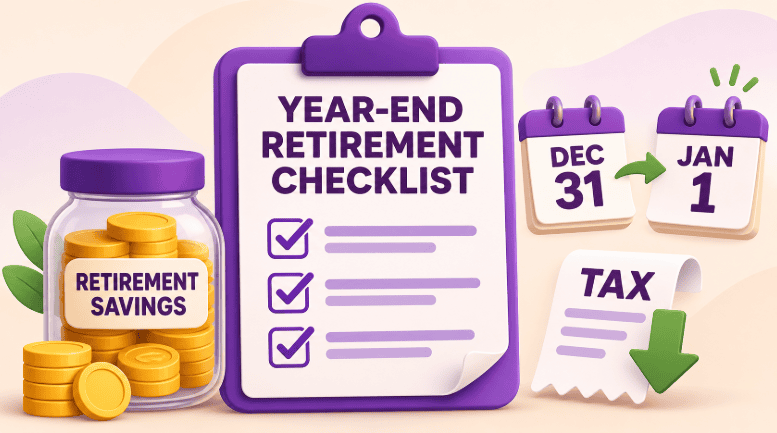
- Before December 31, 2026: the 2026 limits still apply. That means $24,500 for 401(k) deferrals and $17,000 for standard SIMPLE IRA deferrals. Payroll deferrals for 2026 need to happen this year.
- Before April 15, 2027: you can still make a 2026 IRA contribution of up to 7,500(8,600 if you are 50 or older). Tell your custodian which tax year the contribution is for.
- January 1, 2027: update your payroll deferral elections to take advantage of the new limits.
- If your income sits near a phase-out range: rerun your numbers with the 2027 ranges. You may qualify for a deduction or a Roth contribution you could not make before.
- If you are 50 or older: plan your catch-up contributions, and check whether the Roth catch-up wage threshold applies to you.
For a fuller walk-through, see our year-end retirement checklist.
Make the most of the new limits
Limits are only a ceiling. What you get to do with them is up to you. Maybe it is finally funding a Roth IRA because the new income range includes you. Maybe it is a Backdoor Roth that runs on its own. Maybe it is a SEP or SIMPLE IRA that gives your business a real retirement plan without a pile of paperwork.
WealthRabbit was built by CPAs and CFP® professionals to make each of these straightforward, with plans set up and managed entirely online. Whether you are an individual saver, a self-employed professional, or a business owner, you can open your IRA online in minutes.
This article is for general information only and is not tax, legal, or investment advice. Contribution limits and tax rules can change, and your situation may differ. Talk with a qualified tax or financial professional before making retirement decisions. WealthRabbit does not provide tax or legal advice.
FAQs
- IRS, 401(k) limit increases to $25,500 for 2027, IRA limit remains $7,500 (IR-2026-136), November 12, 2026
- IRS, Notice 2026-66: 2027 Amounts Relating to Retirement Plans and IRAs
- IRS, SEP contribution limits
- IRS, SIMPLE IRA plan
- IRS, Saver’s Match
- IRS, Final regulations on the Roth catch-up rule
- IRS, Instructions for Form 8606
- IRS, Publication 560, Retirement Plans for Small Business
- IRS, IR-2025-111: 2026 limits announcement
About the Author

Not sure which plan fits?
Answer three quick questions about team size and budget - we'll match you to a plan, no reading required.